
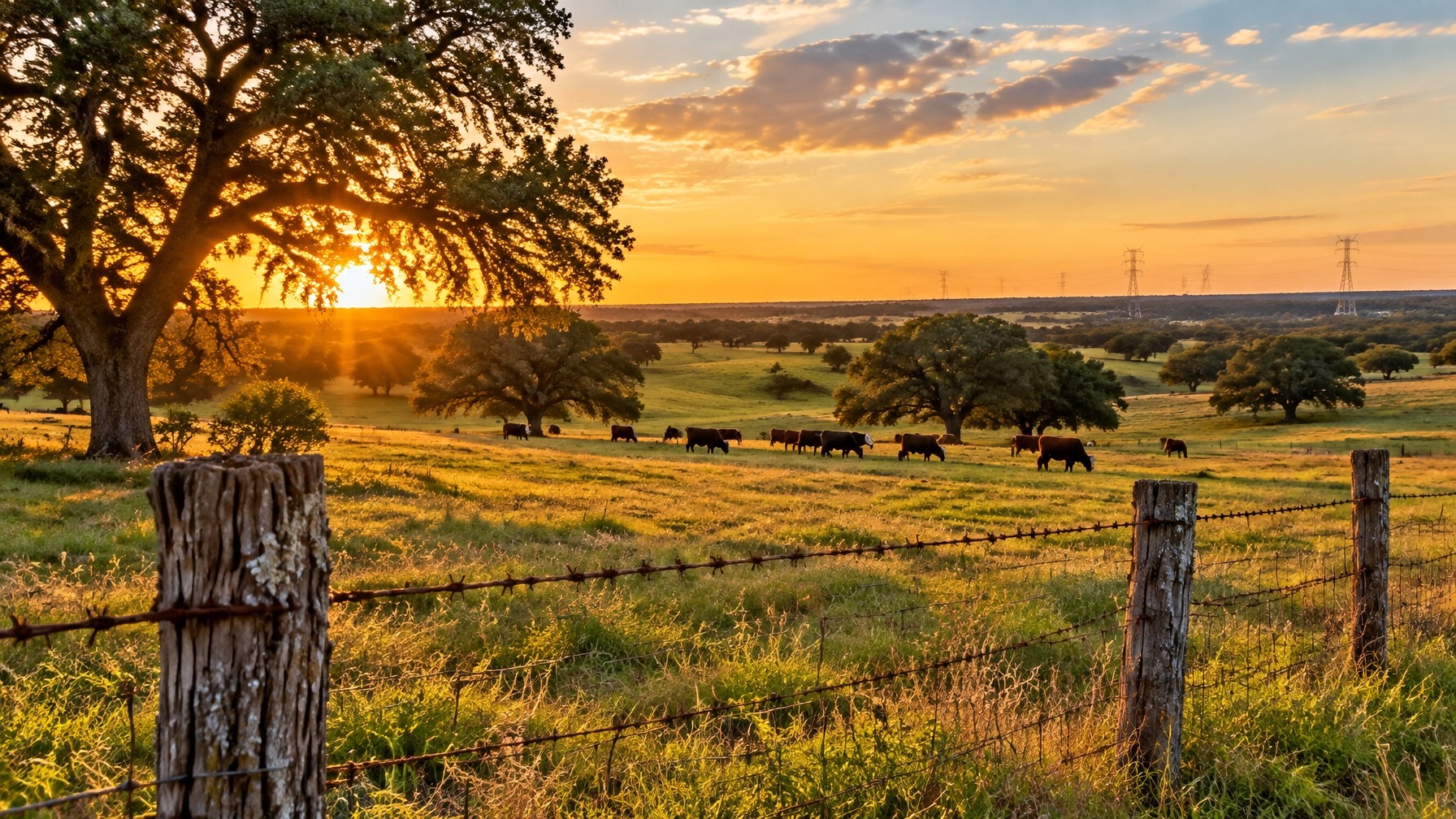
Development pressure across Texas has made one thing common: ranchers and rural landowners receiving unsolicited offers on land that has been in the family for decades. Sometimes the number is startling. A proposed data center site in Hill County drew an offer reported at roughly $100,000 an acre in June, about 14 times its appraised value.
Headlines like that are real, but they are not a formula. Texas rural land averaged $5,218 per acre statewide in the second quarter of 2026, up 3.27% year over year, and the market has settled into a standoff between sellers anchored to recent highs and buyers constrained by borrowing costs. Development interest is highly localized, driven by power capacity, fiber, water, and access rather than by county lines.
So when a developer and a rancher are both interested in your property, the useful question is not which number is bigger. It is which offer leaves you better off.
1. Certainty of the money
An all-cash offer with proof of funds is not the same as a number contingent on rezoning, utility commitments, or financing that may never come together. Ask what has to happen before closing, and who carries that risk.
2. Timeline and control
A 45-day closing and a two-year option period can carry the same headline price and produce very different outcomes. Long option periods tie up your land. If a developer needs time, negotiate what you receive for granting it, and what happens if the project stalls.
3. What you keep
Water rights, mineral interests, access easements, and acreage carved out of the deal all carry value that does not appear in the price per acre. A slightly lower offer that leaves you the water and the minerals can be worth more than a higher one that takes everything.
4. Who pays the costs
Survey, environmental review, legal work, and title costs add up. Confirm who bears them, and what your exposure is if the transaction falls apart after you have spent money.
5. What it costs you afterward
The tax treatment of a sale, and the timing of any reinvestment, can change the net result more than a modest difference in price. Coordinate with your tax and legal advisors before you sign, not after.
And a rancher’s offer is not automatically the conservative one
Agricultural buyers value land on what it can produce, and financing terms matter as much as price. A low rate on a long amortization can make a working ranch offer more competitive than its sticker suggests, while a cash offer at a lower number may net you more after taxes and costs.
The one thing that beats comparing offers
Knowing your property’s value before an offer arrives. Comparable sales, access, water, improvements, grazing capacity, and development potential all move value tract by tract. A broad county average will not tell you what your land is worth, and neither will the first number someone puts in front of you.
If you are holding an offer, or wondering whether it is time to test the market, a realistic, parcel-specific read on your land is the place to start.
Teresa von Illyes, Broker/Owner
AmeriPlex Realtors, Inc.
817-366-0372 | ameriplexrealtors.com
Leave a Reply